Author: Site Editor Publish Time: 11-19-2025 Origin: Site
Exosome skin boosters are gaining attention in regenerative aesthetics for their role in skin repair and rejuvenation. Using exosomes as biological messengers, these treatments support cell communication and the skin’s natural renewal processes.
This guide explains how exosome skin boosters work, their benefits, treatment applications, and what current research says about their use in aesthetics.
Exosome skin boosters are regenerative skincare or injectable treatments that use exosomes—microscopic vesicles released by cells—to support skin repair and collagen production. Exosomes naturally carry proteins, lipids, peptides, and signaling molecules, allowing them to communicate with surrounding cells and guide regenerative processes.
In aesthetic practice, exosome skin boosters are used to support concerns such as uneven texture, dryness, and early signs of skin aging. Depending on the product and treatment protocol, they may be applied as part of professional skin treatments or combined with procedures such as microneedling to support post-treatment recovery and skin renewal.
When an exosome skin booster is delivered to the skin, exosomes release their signaling molecules to nearby cells. These signals can influence the activity of fibroblasts and other skin cells involved in tissue repair.
This may help support collagen and elastin production, extracellular matrix maintenance, and recovery from skin damage. Over time, these processes can contribute to better skin structure, texture, firmness, and overall appearance.
Exosome Signals → Skin Cells → Collagen & Tissue Repair → Skin Improvement
Exosome skin boosters are mainly used to improve visible signs of skin aging and overall skin condition. Key benefits may include:
Smoother Texture – helps improve rough or uneven skin.
Better Firmness & Elasticity – supports firmer, more resilient skin.
Fewer Visible Fine Lines – helps soften early signs of aging.
Improved Hydration & Radiance – helps dry, dull skin look fresher and healthier.
Skin Recovery Support – supports recovery after certain professional aesthetic treatments.
Based on available research and user reviews, the main advantages include:
· Enhanced skin texture and refinement
· Improved hydration and radiance
· Support for dermal collagen regeneration
· Faster post-procedure recovery
· Reduced inflammation and improved barrier function
· Potential for long-lasting improvements when combined with a series of treatments
These characteristics position exosome boosters as a promising addition to regenerative skincare, particularly for patients seeking gradual, natural-looking improvement.
Exosome skin boosters can be used in different professional treatments depending on the treatment goal and product instructions. Common applications include:
Used on areas such as the face, neck, and décolleté to improve overall skin condition and visible signs of aging.
Exosome skin boosters may be used with treatments such as microneedling to support skin recovery and enhance the overall rejuvenation process.
Exosome-based treatments are also used on the scalp, where they may help support the hair follicle environment and healthier-looking hair.
The treatment method and protocol can vary depending on the exosome product and intended application.
Although exosome-based treatments are still relatively new, several studies and clinical observations provide promising indications of their potential:
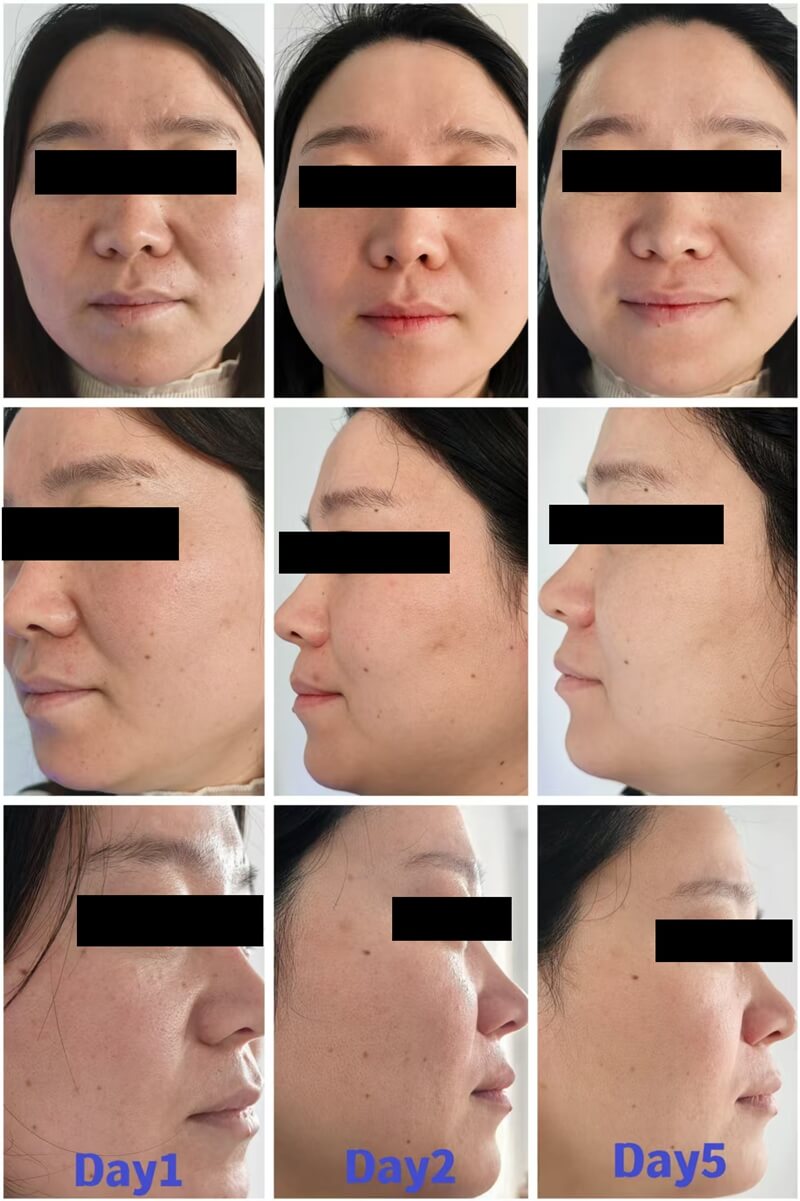
A clinical case report on exosome-based therapy showed notable improvements in pore size, dermal density, and skin smoothness. Structural changes in the dermal layer continued for months following treatment, supporting the hypothesis that exosomes stimulate long-term collagen remodeling (Kim et al., 2021).
Research on stem-cell-derived exosomes has shown that they promote wound healing, support fibroblast activity, and help regulate inflammatory responses. According to Lee (2022), these mechanisms make exosomes an attractive option for addressing skin barrier damage, post-inflammatory pigmentation, and texture irregularities.
Microneedling studies and user feedback suggest that applying exosomes immediately after treatment may reduce redness and accelerate the regeneration of the epidermal barrier. Patel (2023) reports that patients combining microneedling with exosome treatments often experience smoother long-term results.
While evidence is growing, large-scale, long-term randomized trials are still limited. Practitioners should stay updated on regulatory changes and emerging clinical data.
Feedback from skincare forums and aesthetic communities reveals consistent themes:
Many users report noticeably smoother skin, smaller pores, and more even tone within one to two weeks after treatment (Wang, 2022).

Individuals combining exosomes with microneedling often describe shorter recovery periods and less irritation (Patel, 2023).
Some users feel the treatment delivers excellent radiance and refinement, while others believe the improvements are subtle for the cost. This variation may reflect differences in exosome source, concentration, technique, and individual skin biology (Martinez, 2020).
Exosome skin boosters may be suitable for individuals who want to:
· Reduce early signs of aging
· Improve dullness or dehydration
· Address mild texture irregularities
· Enhance skin resilience after sun damage
· Support recovery after resurfacing procedures
Those with active skin infections, severe dermatologic conditions, or certain systemic illnesses should consult a dermatologist before undergoing treatment.
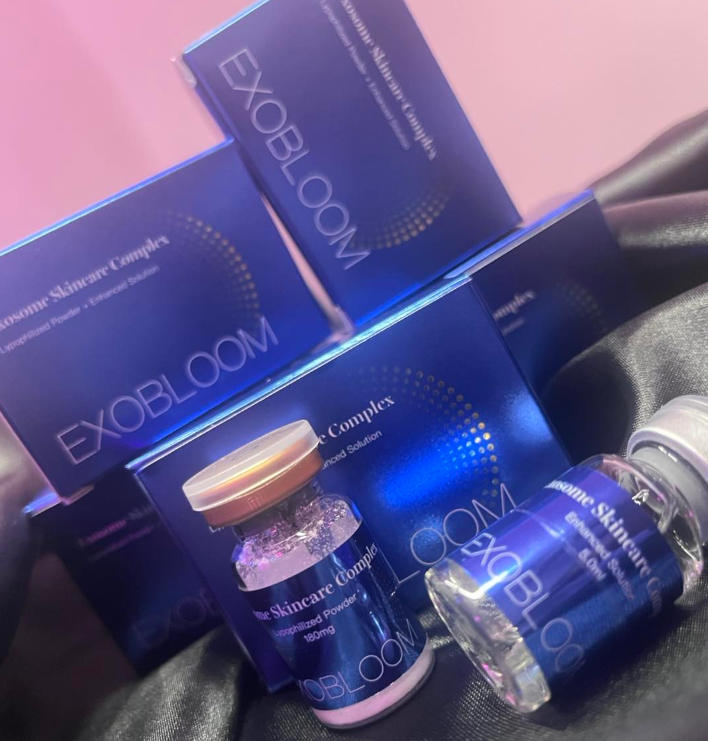
EXOBLOOM® Exosome Skin Booster is developed for professional aesthetic applications, with 5 billion exosomes and a particle size of approximately 30–150 nm.
Designed to support skin rejuvenation and recovery, EXOBLOOM® can be incorporated into professional skin treatment protocols according to the intended application.
For clinics, distributors, and aesthetic professionals looking for an exosome-based solution, EXOBLOOM® provides a professional option for expanding exosome treatment offerings.
Learn more about EXOBLOOM® Exosome Skin Booster →
Exosome skin boosters represent an exciting advancement in regenerative aesthetics. Early evidence and user experiences suggest meaningful improvements in texture, recovery, and overall skin quality (Kim et al., 2021; Wang, 2022). However, because of variability in product purity and evolving regulations, patients should choose clinics that prioritize safety, transparency, and high-quality formulations.
When performed with proper technique and combined with appropriate skincare, exosome boosters can offer a refined, natural rejuvenation outcome that continues to improve over time.

They are commonly used on the face, neck, and décolleté. Exosome-based treatments may also be used on the scalp as part of professional hair and scalp care.
Exosome-based products may be combined with microneedling in some professional treatment protocols to support skin recovery and rejuvenation. The treatment method should follow the specific product instructions.
Exosomes may help improve the appearance of firmness and elasticity by supporting fibroblast activity, collagen production, and extracellular matrix remodeling. However, they should not be viewed as a direct replacement for procedures specifically designed for significant skin tightening.
Possible reactions depend on the product and treatment method. After procedures such as microneedling, temporary redness, swelling, sensitivity, or irritation may occur. Product quality and sterility are also important, as poorly controlled or unapproved exosome products may carry additional risks.
References
1. Kim J. et al. 2021. Journal of Cosmetic Dermatology. Clinical outcomes of exosome-based skin rejuvenation therapies.
2. Lee H. 2022. Dermatologic Therapy. Safety and efficacy evaluation of exosome boosters in aesthetic practice.
3. Martinez R. 2020. Aesthetic Surgery Journal. Comparative review of regenerative injectables including exosome preparations.
4. Patel S. 2023. Journal of Aesthetic Nursing. Patient-reported satisfaction after exosome skin booster treatments.
5. Wang L. 2022. International Journal of Dermatology. Mechanisms of cellular regeneration triggered by exosome application.


