
 |
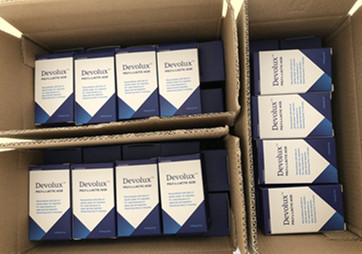


Devolux®
Sunken eyes and hollow under-eye areas can make the face appear tired, aged, and unhealthy even when patients are well rested. Volume loss around the eyes is commonly caused by collagen depletion, facial fat loss, aging, weight reduction, and genetic facial structure changes. Traditional fillers may provide temporary correction, but collagen-stimulating PLLA dermal fillers offer a longer-lasting and more natural-looking solution for facial rejuvenation.
Devolux® PLLA filler from Dermax is designed to gradually restore facial volume by stimulating natural collagen production. Instead of creating an overfilled appearance, Devolux® helps improve hollow eyes, tear trough depressions, temples, and facial volume loss progressively for smoother and younger-looking skin.

Details of poly lactic acid filler
| Product Name | Devolux® PLLA Filler |
|---|---|
| Main Ingredient | Poly-L-Lactic Acid (PLLA) |
| Specification | 160mg/Vial |
| Injection Layer | Between subdermal and superficial fat |
| Treatment Protocol | 3 treatment sessions |
| Interval | 1-2 months between sessions |
| Duration | Approximately 2-3 years |
| Storage | Room temperature |
| Certification | CE, ISO, GMP |
Sunken eyes are often associated with aging and facial volume depletion. As collagen production slows over time, the skin becomes thinner and the fat pads supporting the under-eye area gradually shrink. This creates a hollow appearance beneath the eyes that may also increase the visibility of dark circles and facial shadows.
Several factors can contribute to hollow eyes and under-eye volume loss:
Natural aging
Collagen depletion
Facial fat atrophy
Rapid weight loss
Chronic stress and fatigue
Genetics
Dehydration
Thin skin around the orbital area
In many patients, treating the under-eye region alone is not enough. Volume loss in the upper cheeks and temples can also worsen the appearance of hollow eyes. For this reason, collagen-stimulating dermal fillers are increasingly used to improve overall facial support and rejuvenation.
Unlike traditional fillers that mainly provide immediate volume, PLLA dermal fillers work by stimulating collagen regeneration within the skin. After injection, PLLA microparticles gradually encourage the body to produce new collagen fibers, helping restore lost facial structure over time.
Devolux® PLLA filler is formulated with advanced GranCross Technology to improve particle distribution and support more even collagen stimulation. The gradual improvement helps create a softer and more natural-looking correction for patients concerned about hollow eyes and facial aging.
Benefits of PLLA fillers for sunken eyes include:
Progressive under-eye rejuvenation
Natural-looking facial volume restoration
Improved skin texture and elasticity
Reduced appearance of hollow tear troughs
Long-lasting collagen support
Lower risk of an overfilled appearance
Most patients undergo a series of treatments to achieve optimal collagen remodeling and smoother facial contours.

Devolux® PLLA filler focuses on rebuilding collagen support beneath the skin rather than simply adding temporary volume.
| Feature | Traditional HA Fillers | Devolux® PLLA Filler |
|---|---|---|
| Volume effect | Immediate | Gradual |
| Collagen stimulation | Limited | Strong |
| Duration | 6-12 months | 2-3 years |
| Skin quality improvement | Moderate | Significant |
| Natural-looking correction | Moderate | Excellent |
| Risk of overfilled appearance | Higher | Lower |
Devolux® PLLA filler may be used as part of a comprehensive facial rejuvenation plan to improve multiple areas associated with volume loss.
Common treatment areas include:
Tear trough region
Hollow under-eye area
Upper cheeks
Temples
Mid-face volume loss
Nasolabial folds
Facial wrinkles and creases
Treating surrounding facial structures can help support the under-eye area and create smoother facial transitions.

PLLA fillers are known for long-lasting collagen stimulation compared with traditional dermal fillers. After a complete treatment session, results may last approximately 2 to 3 years.
A standard treatment protocol typically includes 3 sessions spaced several weeks apart to support progressive collagen regeneration and stable volume improvement.
PLLA dermal fillers may be suitable for patients who:
have hollow or tired-looking eyes
experience facial fat loss
want gradual and natural-looking rejuvenation
prefer long-lasting collagen stimulation
seek improvement in skin texture and elasticity
want to avoid an excessively filled appearance
Patients with severe skin laxity or very thin under-eye skin should consult experienced medical professionals for individualized treatment planning.


Founded in 2003, Dermax has more than 20 years of experience in the medical aesthetics industry and supplies aesthetic products to customers in over 80 countries and regions worldwide. With manufacturing facilities, international warehouses, and strict quality management systems, Dermax provides reliable aesthetic solutions with both professional quality and competitive pricing.
Devolux® PLLA filler is developed for clinics and distributors seeking long-lasting collagen stimulation treatments with stable product quality and efficient international delivery support.


When administered by trained medical professionals, PLLA fillers are widely used for facial volume restoration and collagen stimulation. Proper injection technique and treatment planning are important for achieving safe and natural-looking results.
Traditional HA fillers may last around 6-12 months, while PLLA collagen stimulators can support results for approximately 2-3 years after a full treatment session.
PLLA and HA fillers work differently. HA fillers provide immediate correction, while PLLA stimulates collagen gradually. Patients seeking long-term collagen support and natural-looking improvement may prefer PLLA-based treatments.
Collagen stimulators may help improve the appearance of hollow under-eye areas by restoring facial support and improving skin quality. However, dark circles caused primarily by pigmentation may require additional treatment approaches.
Most PLLA treatment protocols include approximately 3 sessions spaced several weeks apart to support progressive collagen regeneration and stable long-term improvement.


