 |
Botulax, Nabota, Sotorior, Rentox

Botulinum toxin type A is an established treatment option for appropriately selected focal spasticity, where excessive muscle activity contributes to pain, impaired movement, difficulty with care, or limitations in daily activities. By temporarily reducing communication between motor nerves and targeted muscles, botulinum toxin can decrease excessive muscle activity and help clinicians manage specific muscle groups as part of a broader treatment and rehabilitation plan.
Dermax supplies a range of botulinum toxin type A products for professional sourcing, including Sotorior®, Toxara™, Botulax®, Nabota® and ReNTox®. Product availability, formulation, strength, indications and regulatory status can vary by market, so healthcare professionals and distributors should verify the applicable product documentation and local requirements before use.
Spasticity is characterized by increased muscle tone and involuntary muscle activity that can interfere with movement, posture, comfort, or daily care. When the problem is concentrated in specific muscles, targeted botulinum toxin treatment can provide a localized approach to reducing excessive muscle activation.
Botulinum toxin type A acts primarily at the neuromuscular junction. It inhibits the release of acetylcholine from motor nerve terminals, reducing the signal that normally triggers muscle contraction. The treated muscle therefore becomes temporarily less active.
This mechanism is particularly relevant to focal spasticity, because treatment can be directed toward selected muscles rather than producing a generalized muscle-relaxing effect.
Clinical guidelines emphasize the importance of selecting patients according to individual treatment goals. For example, NICE recommends considering botulinum toxin type A for adults with cerebral palsy when focal spasticity affects care, causes pain, impairs activity or participation, or when a specialist considers targeted treatment likely to improve symptoms or function.
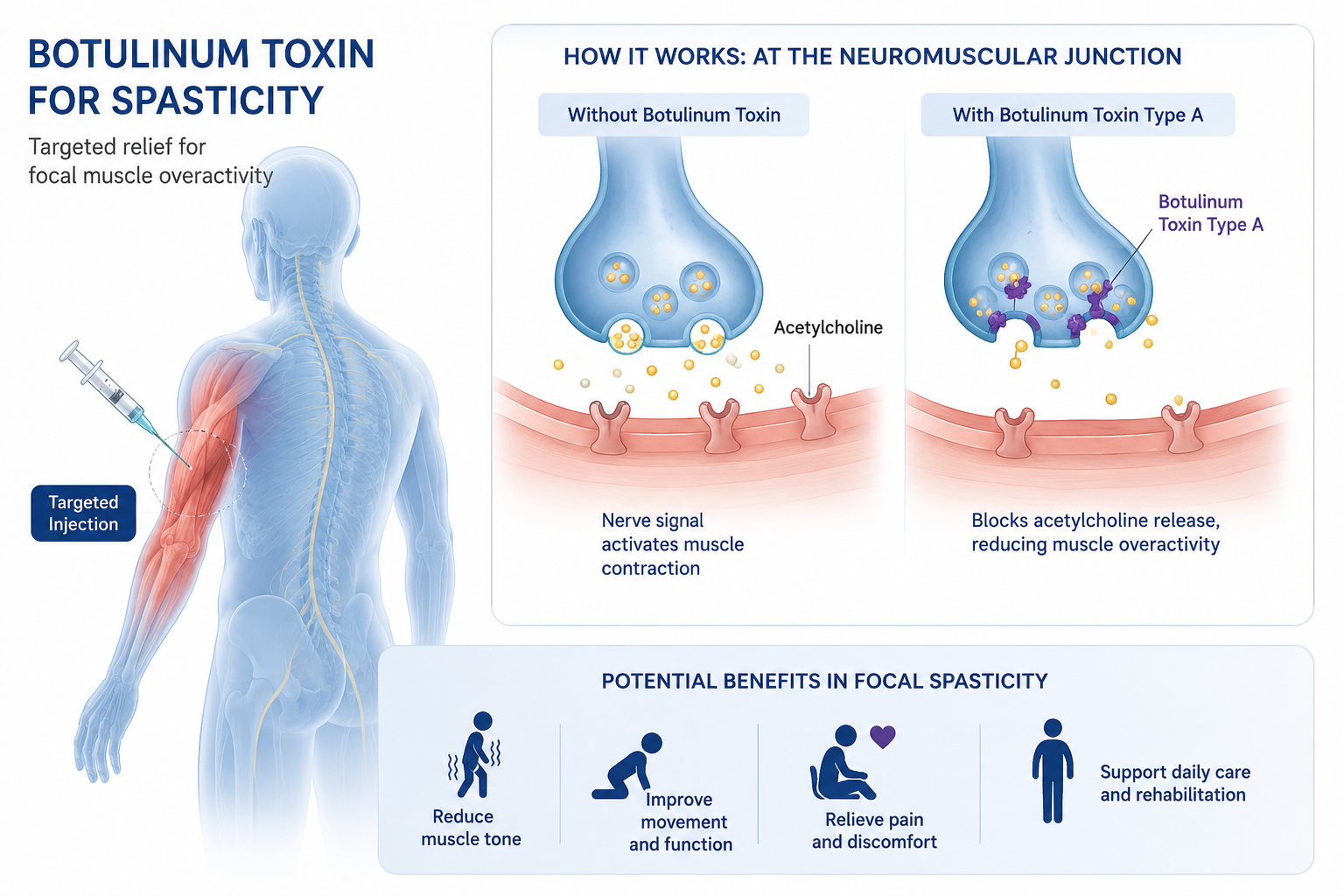
Botulinum toxin may be considered when excessive activity in particular muscle groups contributes to clinically meaningful problems.
Depending on the underlying neurological condition, treatment goals may include:
reducing excessive muscle tone
relieving muscle spasms or discomfort
improving positioning or mobility
facilitating personal care and hygiene
improving tolerance of orthoses or rehabilitation
supporting functional therapy after treatment
In children and young people, clinical assessment is particularly important. NICE recommends evaluating muscle tone, range of movement and motor function before treatment and establishing clear treatment goals. Botulinum toxin treatment should be provided by healthcare professionals with appropriate expertise in the relevant clinical and anatomical areas.
Botulinum toxin should therefore be viewed as one component of an individualized spasticity management strategy, rather than a stand-alone treatment for every patient.
The duration of botulinum toxin effects is not identical for every patient or every indication.
The clinical response can vary according to the product, treated muscles, dose, injection technique, severity of muscle overactivity, individual response and the treatment goal. For this reason, a fixed duration should not be assigned to every botulinum toxin product or every spasticity patient.
Repeat treatment should be determined according to the return of clinically relevant symptoms and the product-specific prescribing information. For example, current prescribing information for some approved botulinum toxin products specifies minimum intervals between treatments rather than suggesting that all patients will experience an identical duration of effect.
An important point for clinicians is that botulinum toxin potency units are product-specific and are not interchangeable between different preparations. Unit values from one botulinum toxin product should not simply be converted to another product without reference to the relevant product information.

Dermax provides several botulinum toxin type A products for professional sourcing. The available portfolio includes both Dermax brands and established third-party brands.
Sotorior® is Dermax's proprietary botulinum toxin type A brand, developed for professional medical aesthetic applications.
For clinics, distributors and other qualified buyers, Sotorior® can be considered as part of a broader botulinum toxin sourcing portfolio. Product specifications, available strengths and applicable regulatory information should be reviewed according to the destination market and intended professional use.
Toxara™ is another Dermax botulinum toxin type A brand available for professional sourcing.
Its inclusion in the Dermax portfolio gives clinics and distributors an additional option when evaluating botulinum toxin products according to formulation, available strength, documentation, intended application and local regulatory requirements.
Botulax® is available from Dermax as part of its professional botulinum toxin sourcing portfolio.
Healthcare professionals should select and administer botulinum toxin according to the specific product information, treatment indication and regulations applicable in their market.
Nabota® is also available through Dermax for professional sourcing.
As with other botulinum toxin products, product-specific potency units, indications and administration requirements should be evaluated independently rather than assuming that units or treatment protocols are directly interchangeable between brands.
ReNTox® completes Dermax's current botulinum toxin type A portfolio.
It is available for professional sourcing for qualified clinics, medical professionals and distributors, subject to applicable market requirements and product documentation.
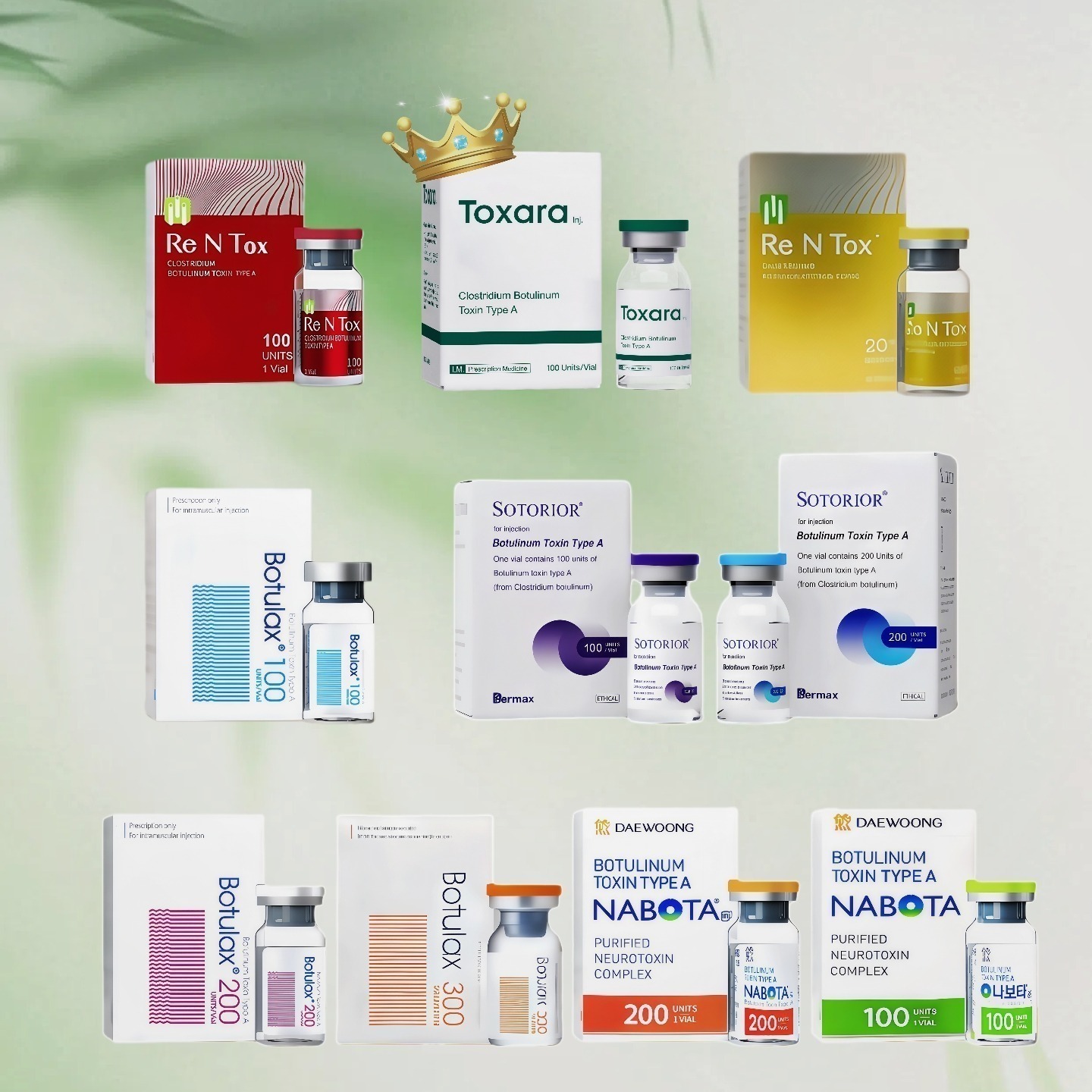
Product selection should begin with the clinical indication and treatment objective, not simply the number of units in a vial.
For professional procurement, clinics and distributors should consider several factors together:
Product-specific documentation: Review the manufacturer's specifications, instructions for use and applicable regulatory information.
Indication and local authorization: Approval and permitted indications for botulinum toxin products differ between countries. A product being available in one market does not automatically mean that the same indication is authorized in another.
Potency units: Units are specific to individual botulinum toxin preparations and should not be treated as universally interchangeable.
Treatment expertise: Accurate identification and targeting of the intended muscles are important for achieving the treatment goal while limiting unwanted weakness. NICE emphasizes treatment by experienced specialists for focal spasticity.
Rehabilitation planning: Botulinum toxin treatment may be integrated with physiotherapy, occupational therapy, orthoses or other rehabilitation strategies. In pediatric spasticity management, NICE specifically describes adapted physical therapy as an essential component following botulinum toxin treatment.
Dermax provides a multi-brand botulinum toxin sourcing platform for medical aesthetic clinics, physicians, distributors and international professional buyers.
Our current portfolio includes Sotorior®, Toxara™, Botulax®, Nabota® and ReNTox®, allowing professional buyers to evaluate different products according to their market requirements and clinical procurement needs.
Dermax focuses on combining competitive pricing with consistent product sourcing, helping professional buyers access established botulinum toxin products without positioning affordability as a compromise on product quality.
For B2B orders, buyers can contact Dermax to discuss available products, strengths, documentation, order quantities and destination-market requirements.

Yes. Botulinum toxin type A is an established treatment option for selected cases of focal spasticity. Clinical guidelines recommend considering treatment according to the patient's symptoms, functional limitations and individualized treatment goals.
Botulinum toxin can reduce excessive activity in targeted muscles and may therefore help manage muscle spasms associated with certain neurological conditions. Suitability depends on the underlying condition and clinical assessment.
Botulinum toxin type A may be considered for focal spasticity associated with cerebral palsy. Treatment decisions should be based on individual goals, muscle involvement and assessment by an appropriately qualified healthcare professional.
No. Potency units are specific to individual botulinum toxin preparations and should not be directly converted between products.
Yes. Dermax supplies Sotorior®, Toxara™, Botulax®, Nabota® and ReNTox® for professional sourcing. Availability and permitted indications may vary according to the destination market.
Dermax provides international B2B sourcing for qualified professional buyers, including clinics, physicians and distributors. Contact Dermax for current product availability, specifications, order quantities and applicable documentation.


